EN
EN
 AR
AR
 HR
HR
 CS
CS
 DA
DA
 NL
NL
 FI
FI
 FR
FR
 DE
DE
 EL
EL
 HI
HI
 IT
IT
 KO
KO
 NO
NO
 PL
PL
 PT
PT
 RO
RO
 RU
RU
 ES
ES
 SV
SV
 TL
TL
 IW
IW
 ID
ID
 LV
LV
 LT
LT
 SR
SR
 SK
SK
 SL
SL
 VI
VI
 SQ
SQ
 ET
ET
 HU
HU
 TH
TH
 TR
TR
 MS
MS
 IS
IS
 LA
LA
 KK
KK
 UZ
UZ
 KY
KY
Analisi dei costi di produzione delle cerniere nascoste per porte nel 2026
Analisi completa della struttura dei costi del prodotto per cerniera da incasso in lega di zinco per porte
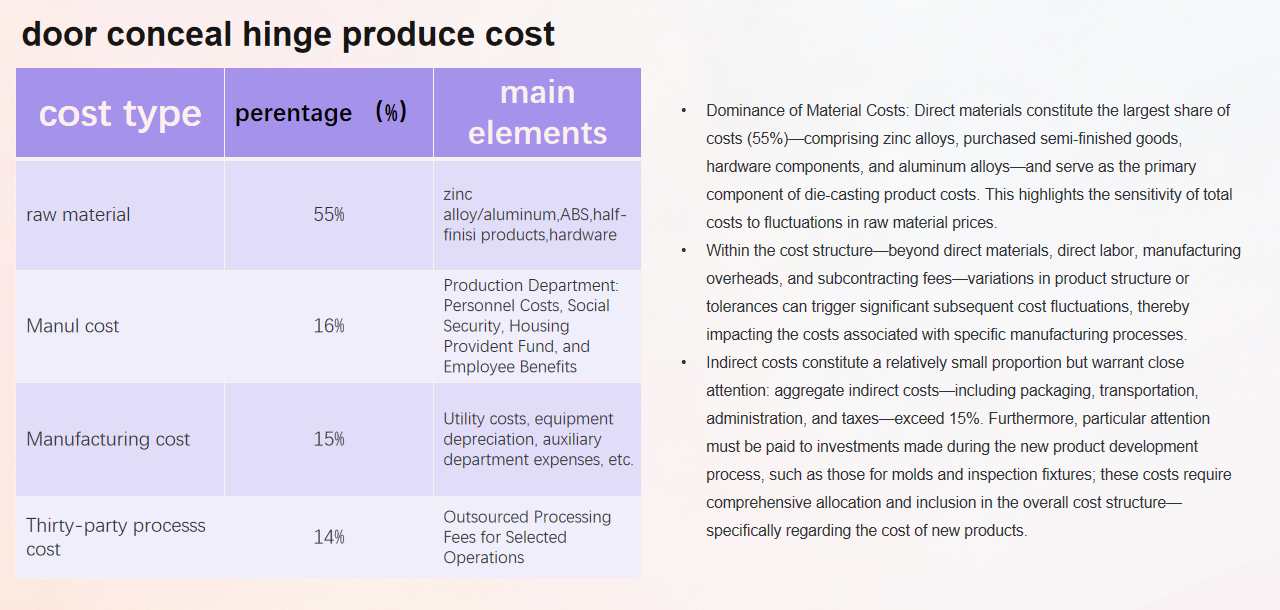
Nel settore manifatturiero, nella gestione delle operazioni e nella pianificazione finanziaria aziendale, comprendere esattamente dove viene spesa ogni singola cifra rappresenta la differenza tra un’azienda fiorente e un’azienda che opera in perdita. Il file immagine intitolato "analisi-costi-cerniera-incasso.jpg" offre una visione chiara e basata sui dati di questa precisa dinamica finanziaria.
Questo documento fornisce un’analisi dettagliata della struttura dei costi di produzione e operativi di un prodotto. Redatto interamente in cinese, adotta un layout equilibrato che combina, sulla sinistra, una tabella dati strutturata e, sulla destra, approfondimenti descrittivi e analitici.
Di seguito è riportata un’analisi estesa e particolareggiata dei componenti visivi, dei valori numerici, delle traduzioni e delle implicazioni strategiche illustrate nel documento: "analisi-costi-cerniera-incasso.jpg" .
1. Titolo del documento e panoramica visiva
Nell’angolo superiore sinistro del documento, il titolo principale definisce l’ambito della presentazione:
-
Testo in cinese: analisi della composizione principale dei costi del prodotto
-
Traduzione in italiano: Analisi dei principali componenti del costo del prodotto
La progettazione della diapositiva utilizza una palette di colori aziendale pulita, con tonalità di lavanda e viola per le intestazioni delle tabelle, in contrasto con uno sfondo avorio chiaro dotato di un leggero gradiente. La presentazione è nettamente suddivisa in due parti funzionali:
-
Sezione sinistra (dati quantitativi): Una tabella a 4 righe e 3 colonne che suddivide le spese in chiare categorie finanziarie, indicandone le percentuali esatte e gli elementi costitutivi.
-
Sezione destra (analisi qualitative): Tre punti elenco esaustivi che approfondiscono i dati finanziari, offrendo osservazioni strategiche sulle sensibilità di mercato, sui rischi strutturali e sulle spese indirette nascoste.
2. Analisi dettagliata della tabella della struttura dei costi
La tabella rappresenta il nucleo quantitativo di "analisi-costi-cerniera-incasso.jpg" dispone di tre diverse intestazioni di colonna:
-
tipo di costo (Cost Type): Categorizza la natura della spesa.
-
percentuale (%) (Proporzione / Quota %): Indica quanto tale categoria contribuisce al costo totale. Complessivamente, queste percentuali ammontano esattamente al 100% ( $55\% + 16\% + 15\% + 14\% = 100\%$ ).
-
elementi costitutivi principali: Fornisce un elenco dettagliato degli articoli, dei materiali o dei servizi rientranti in quella specifica categoria.
Di seguito è riportata la traduzione riga per riga e l’analisi dei dati contenuti nella tabella:
Riga 1: Materiali diretti (Il costo prevalente)
-
Tipo di costo (in cinese): materiali diretti
-
Tipo di costo (inglese): Materiali diretti
-
Proporzione: 55%
-
Elementi costitutivi principali (cinese): lega di zinco-alluminio, materie plastiche, semilavorati, accessori in metallo
-
Elementi costitutivi principali (inglese): Lega di zinco-alluminio, materie plastiche, semilavorati, accessori in metallo.
Riga 2: Manodopera diretta (capitale umano)
-
Tipo di costo (in cinese): manodopera diretta
-
Tipo di costo (inglese): Manodopera diretta
-
Proporzione: 16%
-
Elementi costitutivi principali (cinese): costi del personale del reparto produttivo, contributi previdenziali, fondo pensione obbligatorio, benefit
-
Elementi costitutivi principali (inglese): Spese per il personale del reparto produzione, sicurezza sociale, fondo abitativo, benefici per i dipendenti.
Riga 3: Spese generali di produzione (spese operative)
-
Tipo di costo (in cinese): spese generali di produzione
-
Tipo di costo (inglese): Spese generali di produzione / Spese di produzione
-
Proporzione: 15%
-
Elementi costitutivi principali (cinese): spese per acqua ed elettricità, ammortamento delle attrezzature, spese dei reparti ausiliari, ecc.
-
Elementi costitutivi principali (inglese): Spese per acqua ed elettricità (servizi pubblici), ammortamento delle attrezzature, spese dei reparti ausiliari, ecc.
Riga 4: Costi di lavorazione esternalizzata (catena di fornitura esterna)
-
Tipo di costo (in cinese): costi di lavorazione esternalizzata
-
Tipo di costo (inglese): Costi di lavorazione esternalizzata / Costi di subappalto
-
Proporzione: 14%
-
Elementi costitutivi principali (cinese): costi per l’esternalizzazione di alcune fasi produttive
-
Elementi costitutivi principali (inglese): Spese per l'esternalizzazione di specifici processi produttivi.
3. Traduzione e analisi approfondita dei punti elenco analitici
A destra della tabella, "analisi-costi-cerniera-incasso.jpg" comprende tre punti elenco descrittivi. Questi punti forniscono un contesto fondamentale, avvertendo i manager delle minacce finanziarie esterne e spiegando come lievi modifiche ingegneristiche possano portare a sovraccosti massicci.
Punto elenco 1: Prevalenza dei costi dei materiali e sensibilità al mercato
-
Testo in cinese: la percentuale dei costi dei materiali è la più elevata: i materiali diretti rappresentano la quota maggiore (55%), tra cui leghe di zinco-alluminio, semilavorati acquistati da terzi, componenti meccaniche e leghe di alluminio; essi costituiscono la principale componente del costo dei prodotti ottenuti per pressofusione, evidenziando la sensibilità del costo totale alle fluttuazioni dei prezzi delle materie prime.
-
Traduzione in italiano: I costi dei materiali rappresentano la percentuale più elevata: I materiali diretti rappresentano la quota maggiore (55%), inclusi la lega zinco-alluminio, i semilavorati acquistati, gli accessori hardware e la lega di alluminio. Si tratta dei principali componenti del costo dei prodotti ottenuti per pressofusione, evidenziando l’elevata sensibilità del costo totale alle fluttuazioni dei prezzi delle materie prime.
Considerazione strategica: Questa nota identifica la linea di prodotti come relativa a "prodotti in pressofusione" (die-casting products), che dipendono fortemente da metalli come lo zinco e l’alluminio. Poiché oltre la metà del valore del prodotto è direttamente legata a questi metalli, qualsiasi improvvisa volatilità sui mercati globali delle materie prime avrà un impatto immediato e significativo sui margini di profitto dell’azienda.
Punto elenco 2: Cambiamenti ingegneristici e fluttuazioni cumulative dei costi
-
Testo in cinese: nella composizione dei costi, oltre ai materiali diretti, alla manodopera diretta, ai costi generali di produzione e ai costi di lavorazione esterna, anche modifiche alla struttura del prodotto o alle tolleranze possono causare un repentino e consistente aumento dei costi successivi, influenzando il costo delle operazioni.
-
Traduzione in italiano: All'interno della struttura dei costi, oltre ai materiali diretti, alla manodopera diretta, ai costi generali di produzione e alle spese per esternalizzazioni, qualsiasi variazione in struttura del prodotto o tolleranze ingegneristiche può far lievitare in modo drammatico i costi successivi, influenzando così i costi associati a ciascun processo.
Considerazione strategica: Questo è un avvertimento fondamentale rivolto ai team di ingegneria e progettazione. Indica che il costo non è semplicemente una rappresentazione statica delle fatture di acquisto. Se un progettista modifica l’architettura strutturale del componente o stringe le tolleranze ingegneristiche (rendendo più rigorosa la precisione di fabbricazione), ciò può compromettere i tassi di resa produttiva, aumentare le percentuali di scarto, richiedere utensili più costosi e far impennare inaspettatamente i costi di produzione nelle fasi successive.
Punto elenco 3: Costi indiretti e rischi legati allo sviluppo di nuovi prodotti (NPD)
-
Testo in cinese: la percentuale di costi indiretti è bassa, ma richiede attenzione: i costi indiretti legati a imballaggio, trasporto, gestione e tasse superano complessivamente il 15%; inoltre, occorre prestare particolare attenzione agli investimenti effettuati durante lo sviluppo di nuovi prodotti per quanto riguarda stampi, matrici e dispositivi di controllo (campionatori), la cui ripartizione nei costi complessivi deve essere attentamente valutata, soprattutto ai fini del calcolo dei costi dei nuovi prodotti.
-
Traduzione in italiano: I costi indiretti rappresentano una percentuale bassa, ma richiedono un’attenzione particolare: I costi indiretti quali imballaggio, trasporto, amministrazione e tasse superano complessivamente il 15%. Inoltre, occorre prestare particolare attenzione agli investimenti effettuati negli stampi, nelle matrici e nei dispositivi di controllo (campionatori) durante il processo di sviluppo di nuovi prodotti (NPD). Questa voce di spesa deve essere attentamente valutata e ripartita nei calcoli complessivi dei costi, in particolare per quanto riguarda il costo dei nuovi prodotti.
Considerazione strategica: Sebbene i singoli costi indiretti sembrino trascurabili, nel loro insieme rappresentano una quota significativa di denaro (oltre il 15%). Ancora più importante, ciò evidenzia una trappola frequente nei lanci di nuovi prodotti: la mancata corretta contabilizzazione delle spese in conto capitale iniziali, come gli stampi per macchinari pesanti e i dispositivi di ispezione specializzati. Il documento stabilisce che tali spese ingegneristiche iniziali devono essere attentamente ammortizzate (ripartite sul volume di produzione) affinché l’azienda non fissi un prezzo errato per i suoi nuovi prodotti.
4. Sintesi delle principali considerazioni strategiche
Quando si raccolgono tutti i dati da "analisi-costi-cerniera-incasso.jpg" insieme, emergono diverse realtà finanziarie fondamentali:
-
Forte dipendenza dall’approvvigionamento globale e dalle materie prime: Con un totale del 69% dei costi direttamente legato agli input fisici grezzi e all’outsourcing esterno ( 55% + 14% ), la redditività del prodotto è fortemente vulnerabile a interruzioni della catena di approvvigionamento, colli di bottiglia logistici e all’inflazione dei prezzi dei metalli sul mercato delle materie prime.
-
Un’infrastruttura interna equilibrata: Il lavoro interno diretto (16%) e i costi generali di produzione localizzati (15%) sono perfettamente bilanciati, indicando un ambiente produttivo interno maturo e stabilizzato, in cui l’efficienza del reparto di produzione è probabilmente monitorata con precisione.
-
Avvertenza sui costi nel ciclo di vita: Il testo sposta attivamente l’attenzione dalla produzione quotidiana alla stabilità della progettazione e dello sviluppo iniziali. Costituisce un severo promemoria del fatto che mantenere un prodotto redditizio richiede una stretta collaborazione tra l’ufficio acquisti, il reparto di produzione e gli ingegneri progettisti.
Qui è riportata un’immagine in versione inglese per illustrare l’analisi dei costi di produzione della porta nascosta
Prodotti consigliati





Ultime notizie
-
Dove viene utilizzato il materiale in lega di zinco?
2026-05-31
-
Analisi dei costi di produzione delle cerniere nascoste per porte nel 2026
2026-05-30
-
Come installare una cerniera nascosta sulla porta?
2026-05-24
-
Perché scegliamo la lega di zinco n. 5 per la produzione delle nostre cerniere a scomparsa?
2026-05-22
-
I 10 migliori produttori di cerniere nascoste per porte nel 2026
2026-05-23
-
Cerniere nascoste: la soluzione invisibile per un design senza cuciture
2024-11-08
-
I vantaggi delle cerniere nascoste in lega nell'architettura moderna
2024-11-04
-
Liberare l'acqua nel grande fiume, lottare per rompere le onde----La riunione degli obiettivi aziendali del gruppo Jibang per il periodo 2024-2026 e del piano annuale per il 2024 si è svolta con successo
2024-01-22
-
Buone notizie: Jibang Precision diventa Campione nazionale manifatturiero della provincia del Guangdong
2026-08-28
-
Il vento è forte e le vele stanno salpando.
2024-01-22